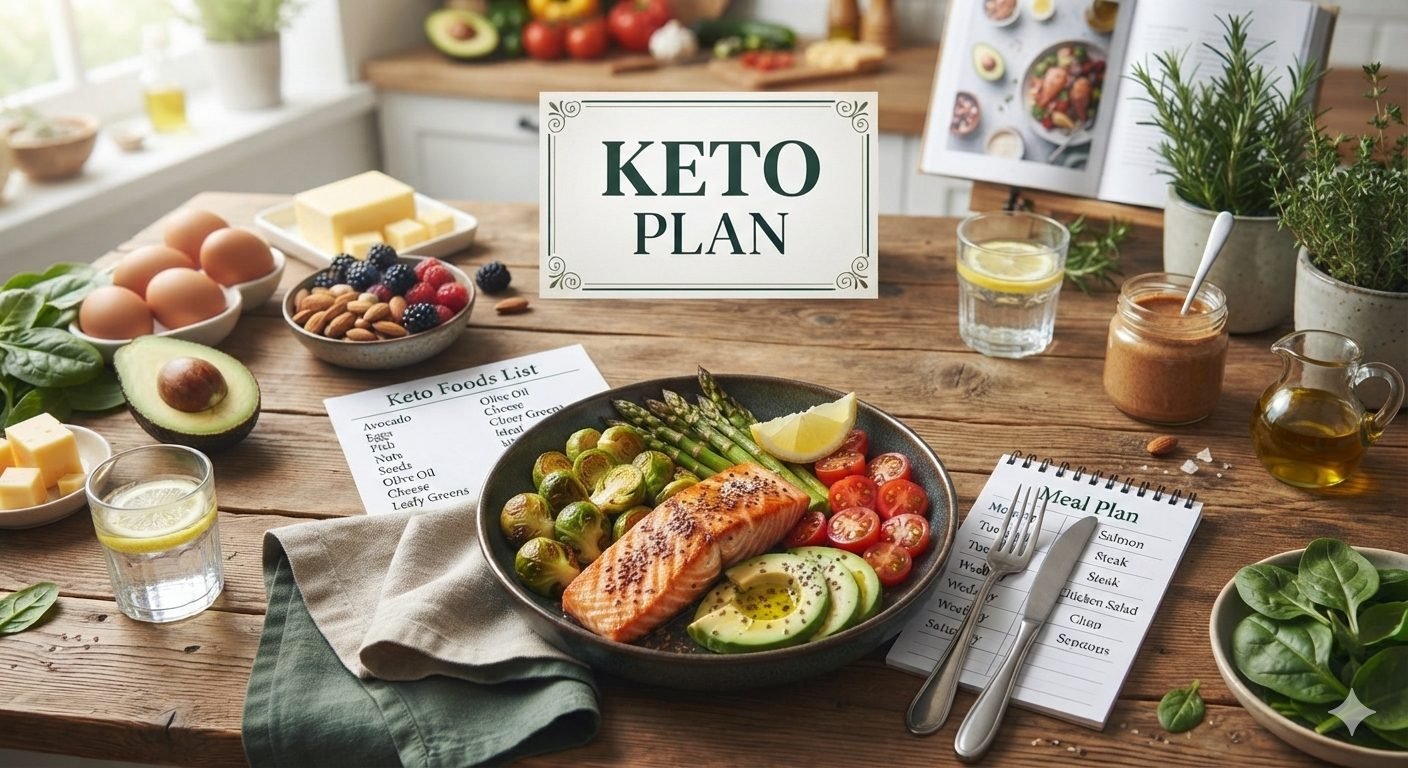
What Is the Keto Diet?
The ketogenic diet or keto diet is a high fat, moderate protein, very low carbohydrate diet. A typical ratio is about 70 to 75% fat, 20 to 25% protein and only 5 to10% carbs of total calories. The goal is to shift your body from burning glucose from carbs to burning ketones made from fats, a state called ketosis. It usually takes a few days of very low carb intake often fewer than 20 to 50 grams per day to enter ketosis.
Keto was originally used as a medical diet for epilepsy in children. It’s sometimes used short term for weight loss or to help manage type 2 diabetes but it is not a typical balanced diet. Harvard Medical School emphasizes that keto is a medical diet with serious potential risks and should generally be a short term experiment for weight loss, not a permanent lifestyle. Always talk to a doctor or dietitian before trying keto, especially if you have any health conditions.
In ketosis your body produces ketone bodies from fat to fuel your brain and muscles. Some people feel very hungry at first as the body adjusts while others quickly report less appetite. The exact carbohydrate limit to trigger ketosis varies by individual but most keto plans stay under about 30 to 50 grams net carbs per day (net carbs = total carbs minus fiber).
Foods to Eat on Keto
A healthy keto meal plan emphasizes:
- Healthy fats: Olive oil, avocado, nuts, seeds, butter, ghee, coconut oil. Saturated fats like butter and coconut oil are used heavily on keto but experts caution keeping saturated fat to less than 7% of calories due to heart risk.
- Protein: Eggs, meat (beef, chicken, lamb), fish (especially fatty fish like salmon, mackerel) and moderate cheese. Keto doesn’t require very high protein but you still need enough.
(Note: Keto doesn’t distinguish much between lean vs fatty proteins even high fat meats like bacon and fatty cuts are eaten on keto) - Low carb vegetables: Leafy greens (spinach, lettuce, kale), cruciferous veggies (cauliflower, broccoli, cabbage), zucchini, cucumbers, peppers, mushrooms, etc. These provide fiber and nutrients with minimal carbs.
- Some fruit: Only very low sugar fruits in limited amounts for example a few berries or a small amount of lemon and lime. All other fruits (bananas, mangoes, grapes, dates, etc.) are too high in sugar for strict keto.
- Full fat dairy: Butter, cream and small portions of cheese or unsweetened yogurt can fit if they don’t push you over the carb limit. Watch out for hidden sugar in flavored yogurts.
Sample keto friendly foods: Eggs, chicken, beef, lamb, salmon, tuna, shrimp, paneer; cheese (cheddar, mozzarella, etc.), avocados, olives, nuts (almonds, walnuts), seeds (chia, flax, pumpkin), olive oil, coconut oil, ghee, spinach, kale, cauliflower, broccoli, zucchini, cucumber, capsicum and green beans.
It’s best to focus on whole minimally processed foods rather than packaged "keto products" or excessive deli meats. A healthier keto emphasizes fish, olive oil, nuts and vegetables (similar to a Mediterranean diet) rather than lots of processed meats and heavy cream.
Foods to Avoid or Limit
To stay in ketosis, strictly limit.
- Starches and grains: No rice, wheat, pasta, bread, roti, tortillas, cereals, oats, maize, etc.
- Sugars: Avoid all sugar, desserts, soda, fruit juices, honey, syrups, sweets, candy.
- High carb fruits: Bananas, apples, oranges, mangoes, pineapple, grapes, dates, etc.
- Starchy vegetables: Potatoes, sweet potatoes, carrots in large amounts.
- Legumes and beans: These have too many carbs (except very small portions of e.g. lentils might fit if well tracked).
- Low fat processed foods: Many low fat or "diet" foods compensate with sugar.
In short, cut out traditional South Asian staples like white rice, roti/naan/paratha, many lentil dishes and sugary treats (Cauliflower rice or large salads can replace rice, skip the bread). Whenever cooking curries or dals, leave out any added sugar or potato and watch starchy add like peas.
7 Day Beginner Keto Meal Plan
The following is a simple example one week menu for a typical adult. Portion sizes should be adjusted to your calorie needs (smaller for smaller people, more for larger or more active people). This plan aims for roughly 1200–1500 kcal/day with 20–30 g net carbs per day, enough to induce ketosis for most adults. Snacks are optional if needed for hunger.
Tip of the Day: Drink plenty of water throughout the day. Electrolytes (salt, potassium, magnesium) can help prevent the “keto flu” when you first reduce carbs.
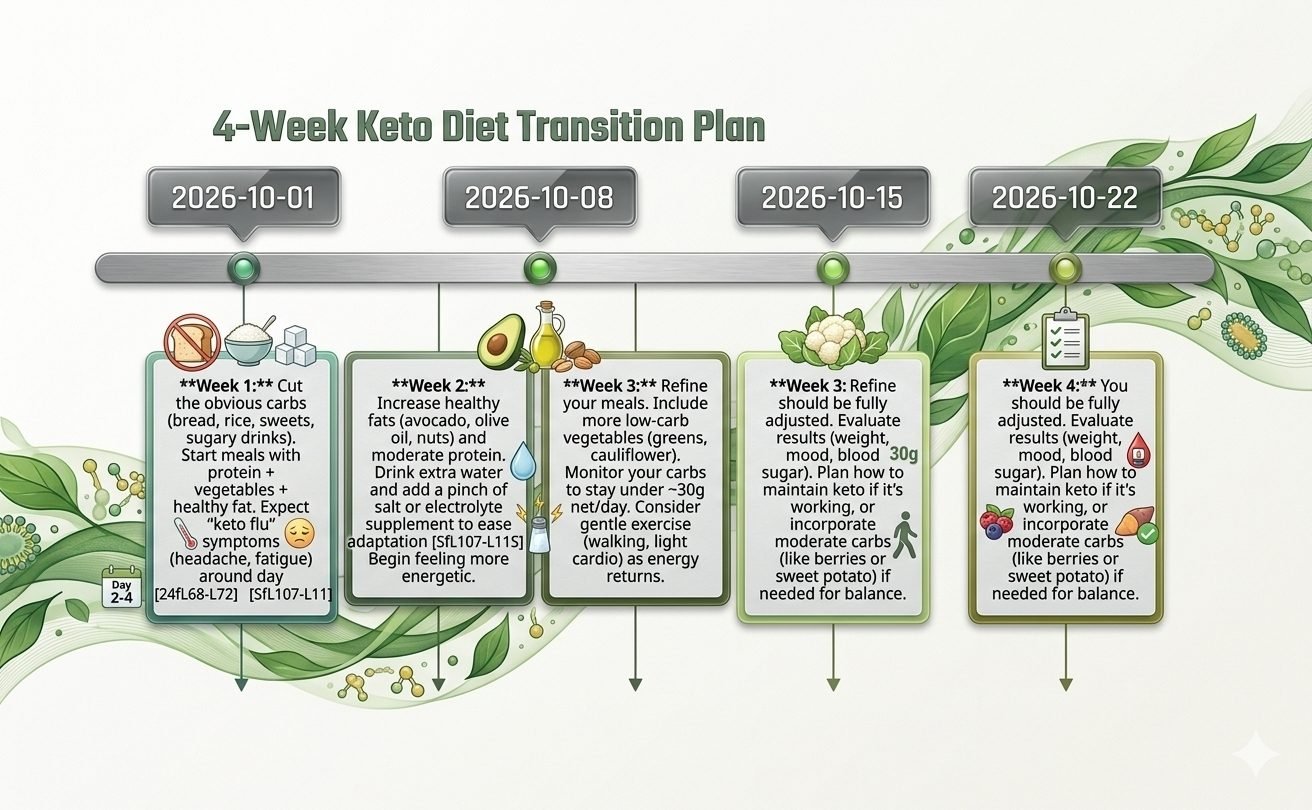
4 Week Beginner Transition Timeline
|
This timeline illustrates a gradual approach, start by eliminating high carb staples and focus on water and electrolytes (to reduce early “keto flu” symptoms). By weeks 2 to 4, adjust meals for variety and monitor how you feel and progress.
Adapting Keto for Pakistani/South Asian Diets
You can enjoy South Asian flavors on keto by tweaking recipes:
- Replace rice and roti: Use cauliflower rice, sautéed shredded cauliflower or just extra vegetables instead of biryani/pulao. Skip chapati/naan entirely a common Pakistani keto tip is to eat curries without bread or serve them on a bed of salad.
- Curries without sugar or potatoes: Make chicken karahi, beef curry or dal with ghee/olive oil and load up on low carb veggies (spinach, okra, cauliflower) instead of potatoes or peas. For example, Palak (spinach) chicken or Bhindi masala with ghee and spices is naturally low carb.
- Desi breakfasts: Instead of paratha and sweet chai, try Masala omelette (spiced scrambled eggs) or omelette with cheese and cucumbers. You can have chai/coffee with full fat milk or cream (no sugar) or an unsweetened herbal tea.
- Keto treats: Some people make low carb versions of roti (using almond or coconut flour) or sweets (with stevia) but these aren’t necessary. Instead of sweet, try keto lassi (yogurt blended with water, salt, and mint) or raita with cucumber (no sugar) as refreshing side dishes.
- Sample Pakistani keto recipe idea: Chicken Karahi (desi style) made with chicken, tomatoes, ginger garlic, green chilies and spices, cooked in ghee, served with cucumber salad (skip any sugary tomato paste or potatoes).
Always check store bought spice mixes or sauces for hidden sugar. Many traditional dishes already fit keto if you remove the carb components. The key is to center meals on protein (meat, eggs, paneer), non-starchy veg and fat (ghee, oil and nuts) while minimizing rice/roti.
Keto for Weight Loss and Health – What Research Shows
Many people try keto to lose weight. Some studies do show rapid short term weight loss. A 2026 meta-analysis found ketogenic diets led to significantly more weight loss and fat loss than Mediterranean diets though both diets improved metabolic health. In that study, keto subjects lost on average 3.5 kg more than those on a Mediterranean diet in the short term. However by looking at many trials, the overall evidence suggests:-
- Weight loss (short term): Keto often leads to faster initial weight loss (especially in first 3 to 6 months) than higher carb or low fat diets. This may be partly water loss and a reduced appetite from eating more fats and protein.
- Weight loss (long term): Over the long term like more than one year, studies generally find weight loss differences between diets narrow and become similar. In other words, any advantage of keto tends to diminish unless the diet is very strictly maintained. A sustainable eating pattern whether Mediterranean, low fat or low carb, you can stick to matters more for long term success.
- Blood sugar and diabetes: Many people experience lower blood glucose on keto. Short term trials show ketogenic diets can significantly improve HbA1c and blood sugar in type 2 diabetes. NHS type guidance acknowledges that low carb diets can improve blood glucose and reduce diabetes risk in the short ter.
Caution: If you take insulin or diabetes medications, reducing carbs can cause hypoglycemia. Always consult your doctor so they may need to adjust medications.
- Cholesterol and heart health: Keto is high in saturated fat, which can raise LDL “bad” cholesterol. Harvard Health notes that keto often increases LDL cholesterol, a risk factor for heart disease. Some people on keto see favorable changes (higher HDL and lower triglycerides) but LDL and total cholesterol can go up. In contrast, diets like the Mediterranean (rich in olive oil, fish and nuts) are linked to long term heart health. The 2026 review concluded keto had similar effects on blood sugar and blood pressure to a Mediterranean diet but Mediterranean may be more sustainable for long term heart health.
- Micronutrients and fiber: Keto can be low in fiber and certain vitamins/minerals (vitamin C, potassium, magnesium, B vitamins). Harvard warns keto followers risk nutrient deficiencies if they don’t include enough veggies and supplements. Diets rich in fruits, whole grains and beans (like Mediterranean or DASH) may provide a broader range of nutrients.
Bottom line:-
Keto can be an effective short term strategy for weight loss or blood sugar control (with medical supervision) but it carries risks if done improperly. The best diet is one you can maintain healthily. Many experts recommend a Mediterranean style low carb plan (healthy fats, lots of vegetables, moderate protein) for long term health.
Common Keto FAQs
Q: How many carbs per day on keto?
It varies by person but true ketogenic diets usually keep net carbs around 20 to 50 grams per day. Some people need to stay under 30g to maintain ketosis while others reach ketosis closer to 50g. The NHS considers low carb as 50 to 130g/day so keto is at the very low end.
Q: Can I drink tea or coffee?
Yes, unsweetened tea and coffee are fine. Beware of hidden carbs in additions. Don’t add sugar or sweet syrups. Use heavy cream or full fat milk (in moderation) instead of sugar.
Q: Can I eat eggs on keto?
Absolutely. Eggs are a keto staple (2 eggs only have approximately 1g carb). They’re a great source of protein and fat.
Q: Can I eat chicken on keto?
Yes, plain chicken is very low carb. Avoid breading or sweet marinades. Tandoori style or grilled chicken works well. Use oil, ghee or cream sauces to add fats if needed.
Q: Can I eat potatoes or rice on keto?
Generally no. White or brown rice, potatoes, sweet potatoes and other starches are too high in carbs to fit a strict keto plan. Swap them for cauliflower rice, cabbage “rice,” or extra non starchy veg.
Q: Can I eat fruit on keto?
Most fruits are high in sugar. Berries (strawberries, raspberries, blueberries) are the lowest sugar fruits and can be eaten in small portions. Avocado is technically a fruit and is very keto friendly (high in fat, low in carbs). Citrus (lemon/lime) is okay in small amounts for flavor. Avoid bananas, mangoes, grapes, pineapples, apples, etc. if you want to keep carbs low.
Q: What about nuts and seeds?
In moderation. Almonds, walnuts, flaxseeds, chia seeds and others are good sources of fat. But they have some carbs, a handful of nuts (15 to 20g) has ~approximately 2 to 5g net carbs. Track portion sizes. Macadamia nuts and pecans are lower carb nuts that many keto followers prefer.
Q: How do I know if I'm in ketosis?
You might feel reduced hunger and you may notice a fruity smell on your breath (from acetone). Urine ketone strips or blood ketone meters can measure ketone levels if you want to be precise. But generally, strict carb restriction for a few days is usually enough to enter ketosis.
Q: What is “keto flu,” and how long does it last?
The “keto flu” is a collection of temporary symptoms (headache, fatigue, irritability, constipation, brain fog) that some people get in the first week of keto. It’s not a true illness, just your body adapting to low carbs. It typically lasts a few days to two weeks. To manage it, drink plenty of water, replenish electrolytes (salt, potassium, magnesium) with foods like leafy greens and broth, and don’t push high-intensity exercise. Cleveland Clinic suggests “drinking plenty of plain water or sugar-free electrolyte options” and adding salt to meals as needed.
Q: Should everyone try keto?
No. Keto is not recommended for children (except for epilepsy treatment), pregnant or breastfeeding women or people with kidney disease, liver disease, pancreatitis or a history of eating disorders. It can also strain the kidneys if you overeat protein. If you have diabetes, especially on insulin or sulfonylureas, you need medical guidance because carb cutting can dangerously lower blood sugar. Always check with a healthcare provider before starting keto.
Risks and When to Seek Medical Advice
A strict keto diet can have side effects and is not suitable for everyone. Potential risks include:
- Nutrient deficiencies: Because fruits, whole grains and many vegetables are limited, you may miss vitamins and minerals (e.g. vitamin C, fiber, potassium, magnesium). Supplements or careful food choices are needed.
- High LDL cholesterol: Harvard health warns that keto can raise LDL cholesterol due to high saturated fat intake, possibly increasing heart disease risk.
- Kidney/liver stress: Processing extra protein and fats can strain kidneys and liver. Cleveland Clinic explicitly cautions that keto “can put too much strain on [the] liver or kidneys” for some people.
- Constipation: Common on keto because fiber is reduced. Eat plenty of fibrous veggies and drink water.
- Hypoglycemia: If you have diabetes and take glucose lowering meds, cutting carbs can cause low blood sugar. NHS advises monitoring and consulting your doctor to adjust meds.
- Other: Gallbladder issues (because of the high fat), bad breath (ketone odor), mood swings or “brain fog” in early days.
When to get help: Stop the diet if you experience unusual or severe symptoms like chest pain, fainting, prolonged nausea, extreme weakness, symptoms of ketoacidosis, etc. Always consult your doctor if you have any chronic condition or are on medication. Cleveland Clinic and NHS sources stress seeking medical advice before starting, not just after problems arise.
Practical Tips for Keto Success
- Plan your meals: Having a plan (like the sample above) helps avoid slip-ups. Batch cook meats and chop vegetables in advance.
- Grocery checklist: Stock up on eggs, chicken, fish, meat, cheese, Greek yogurt, avocados, nuts & seeds, olives, olive and coconut oil, leafy greens, broccoli, cauliflower, zucchini, cucumber, berries (in moderation) and unsweetened teas/coffee. Keep some electrolyte supplements or broth on hand.
- Read labels: Watch out for hidden carbs in sauces, marinades and packaged foods.
- Increase fats gradually: If you feel too hungry, add more fat (e.g. butter, olive oil, or an extra egg). Fats should be your main energy source.
- Eat when hungry: Unlike calorie restricted diets, keto often naturally reduces appetite. Eat to satiety, which may be 2–3 meals/day plus snacks if needed.
- Monitor portions: “High-fat” doesn’t mean unlimited calories. If weight loss stalls, you may still need to watch total intake.
- Stay hydrated: Keto causes water loss, so drink plenty. Add salt or mineral water if you feel lightheaded or crampy.
- Join support groups: Online communities and local support can offer recipes (e.g. South Asian keto recipe blogs or YouTube channels) and motivation.